
For more than two decades, internationally recognized fine art photographer Robert Sturman has used his camera to document dignity, resilience and healing. His work has taken him into prisons, military communities and cultures around the world, capturing people who have endured trauma and found ways to reclaim their lives.
Then a rescued coonhound named Otis entered his world and gave Robert’s work an entirely new purpose.
In this episode of the Better Life for Animals podcast, Robert joins host Cheryl Moss to share how Otis survived the animal-testing industry, why his story must be told and how one dog transformed Robert into a more outspoken advocate for animals.
The Moment the Veil Began to Lift
Robert’s awareness of animal testing began when he was only 14 years old, after he saw a film about vivisection. The experience disturbed him enough that he chose the subject for a class 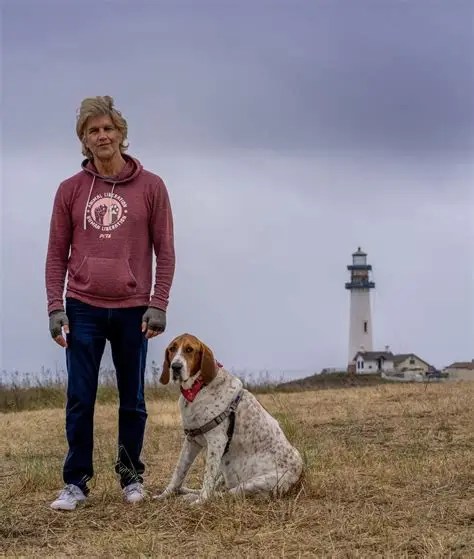 project.
Although he stopped eating meat, Robert acknowledges that it took many more years to fully recognize how deeply society conditions people to accept the exploitation of animals.
His story is a reminder that compassion is often a journey. We may sense that something is wrong long before we understand how to respond. What matters is our willingness to keep learning and allow that awareness to change how we live.
The Dog Who Changed Everything
Robert first learned about Otis through the Beagle Freedom Project. He had recently lost his dog and believed he was ready to foster, but not adopt, another animal.
That changed almost immediately. When Robert and Otis looked into each other’s eyes, there was an unmistakable connection. Shortly after Otis arrived at Robert’s home, Robert knew this dog would never be passed from foster home to foster home again. Otis had found his permanent home.
Born into a facility that bred animals for laboratory use, Otis carries an identification tattoo inside his ear. For Robert, that tattoo is painful evidence of an industry most people never see. Today, Otis is no longer simply a survivor. He is an ambassador for the countless animals who remain hidden inside research and breeding facilities.
Animals Deserve to Be Seen
Robert has built his career around helping people feel seen. Through Otis, he began looking more deeply at the inner lives of animals.
He sees intelligence, awareness, kindness and problem-solving abilities. Most importantly, he sees another living being who belongs on this earth and deserves to live in peace.
Animals trapped within systems of confinement have no control over what happens to their bodies or their lives. Robert believes that recognizing their individuality is an essential first step toward challenging those systems.
Is Compassion Something We Are Born With?
Robert reflects on an early childhood memory that showed him compassion had always been present within him. At the same time, he recognizes that having compassion and living compassionately are not always the same thing.
Cultural conditioning can teach us to overlook suffering, even when caring is part of our nature. Compassion must be acknowledged, strengthened and put into action.
For anyone wondering where to begin, Robert recommends starting with food. Choosing plant-based meals allows us to reduce harm through decisions we make every day.
Exposing the Hidden Animal-Testing Industry
Robert and Otis are helping bring attention to the facility where Otis was born and to the wider industry that breeds dogs and other animals for research.
Their story will also be included in Born on Death Row, a documentary examining this largely hidden industry. The film features advocates, rescuers and survivors, including Otis, who are helping the public understand what happens behind closed doors.
Robert encourages listeners to learn more about the documentary and support its production at BODRDoc.org.
The Transformative Power of Being With Animals
Robert leaves listeners with a beautifully simple invitation: spend time with animals.
Animals teach us about presence, trust, forgiveness and the meaning of unconditional connection. Sanctuaries offer a particularly powerful opportunity to meet animals as individuals and witness them living with greater freedom, safety and dignity.
Otis survived a life that no animal should ever experience. Now, through Robert’s photography, storytelling and advocacy, his life is helping make the invisible visible.
Listen to the complete conversation at https://www.BetterLifeForAnimals.com/podcast/082-Robert-Sturman.
About Robert Sturman
Robert Sturman is a fine art photographer and speaker whose work explores dignity, presence, and healing. For more than two decades, he has made images celebrating the vast diversity of humanity in pursuit of healing — inside prisons, among veterans and active-duty military, with first resRobert Sturman is a fine art photographer and speaker whose work explores dignity, presence, and healing. For more than two decades, he has made images celebrating the vast diversity of humanity in pursuit of healing — inside prisons, among veterans and active-duty military, with first responders, across global communities, and throughout the natural world — creating photographs that ask us to look again at one another and at ourselves.
Using the figurative poetry of yoga as one of his central visual languages, Sturman has created an expansive body of work that points insistently toward what is good, what is working, and what is possible in human beings. His photographs do more than document physical practice. They speak to resilience, grace, and the transformative power of being seen in a positive light.
His work is guided by a simple belief: when we see each other with respect, we feel seen.
Sturman’s honors include being named Visual Artist of the Year by the GRAMMYs, which coincided with creating the official artwork representing the 47th Annual GRAMMY Awards. His work has also been the subject of two separate New York Times articles celebrating his photography. Additional honors and collaborations include the United States Olympics, the FIFA World Cup, and TEDx, where he presented Seeing Our Humanity Through a Photographer’s Eye.
Sturman often reflects on Rumi’s words, “I can’t stop pointing to the beauty.” That spirit runs through his life and work. He often says that photographs are ideas — and at their best, they can widen our vision, restore perspective, and help move humanity in a more conscious direction.
RobertSturmanStudio.com
TEDx Talk https://youtu.be/-fpbZReEKlo
Follow the work — Daily Inspiration:
www.instagram.com/robertsturman
https://www.facebook.com/RobertSturmanArtist
About Cheryl Moss
Cheryl Moss is the host of the Better Life for Animals podcast, where she shares uplifting stories from sanctuaries and highlights the work of vegan activists, ethical consumers, and animal welfare leaders. She is also the founder of the Funding Blueprint for Sanctuaries summit, designed to empower those involved with sanctuaries to create sustainable funding streams.
A passionate advocate for animal welfare, Cheryl is dedicated to ending factory farming and supporting underrepresented sanctuaries.
Beyond podcasting, Cheryl is a banking professional and an accomplished children’s author. A graduate of Main Street Vegan Academy, she recently added Vystopia Transformation to her resume. The Vystopia work, created by psychologist Clare Mann, focuses on the emotional impact many people experience after becoming aware of animal suffering and exploitation. The training offers tools for resilience, communication, and emotional well-being while continuing to advocate for positive change.
Through her books, Gabriel, Cluck, and Pickle the Pig, Cheryl inspires young readers to embrace kindness, sustainability, and compassion for animals.
When not advocating, she enjoys Pilates and spending time with her rescue dogs and grandchildren. Through her work, writing, and activism, Cheryl continues to inspire positive change for animals and the planet.
https://www.facebook.com/BLFAnimals/
https://www.instagram.com/betterlife4animals/
https://www.linkedin.com/in/cherylmossabetterlifeforanimals/
