
What happens when the animal you love would have been considered disposable almost anywhere else?
For Suki Player, that question became deeply personal when Hippo, one of her first two pigs, began falling over and having seizures. After extensive testing, he was diagnosed with myotonia congenita, a rare muscle condition that eventually left him unable to stand up without help.
Once Hippo is on his feet, though, he is happy, affectionate, and very much enjoying his life.
Then came the realization that changed everything for Suki. In most farm settings, a pig with Hippo’s disability would likely have been killed rather than given the opportunity to live.
That was the turning point.
In this episode of the Better Life for Animals Podcast, Cheryl Moss talks with Suki Player, founder of Little Pigs at Home in West Wales, about the intelligence, emotional depth, individuality, and often misunderstood needs of pigs. What began with two pigs, Hippo and Tulip, grew into a sanctuary-style home and education center caring for pigs with disabilities, behavioral challenges, trauma, and nowhere else to go.
Pigs Are Far More Complex Than Most People Realize
Suki shares stories that make it impossible to think of pigs as interchangeable animals.
There was Bluebell Bear, who laughed when someone blew a raspberry on her belly. When Bluebell died, Tulip mourned so deeply that he stopped eating and developed a temperature.
Then there is Aussie Orange, who arrived morbidly obese and unable to see because folds of fat covered his eyes. With patience, careful nutrition, companionship, and time, he lost half his body weight. Today, he runs through the fields and roots like the other pigs.
Each pig has individual preferences, friendships, routines, and ways of communicating. Some love attention. Others need time to trust. Some want to sleep with other pigs, while others prefer their own space.
One pig, Frankie Bloomers, decided he would rather live with the sheep.
The Veterinary Care Gap Few People Know About
One of the most surprising parts of the conversation is Suki’s explanation of the challenges involved in finding medical care for pigs.
Because pigs are classified primarily as food animals, veterinary medicine and emergency care for them can be extremely limited. Some medications are unavailable or unlicensed for pigs, certain procedures are rarely performed, and access to emergency hospitalization can be difficult or impossible.
Little Pigs at Home works closely with veterinarians and veterinary students to help expand knowledge about the care of pigs living as rescued animals and companions.
For Suki, this is part of the larger mission. Little Pigs at Home is not only a place of rescue. It is also an education center where people can learn who pigs really are and how their lives are affected by being viewed primarily through the lens of the food industry.
The Truth About So-Called Micro Pigs
The conversation also challenges the persistent myth of the “micro pig.”
Suki explains what prospective pig guardians need to understand before bringing one home. Pigs can grow far larger than expected, live for approximately 15 years or longer, require significant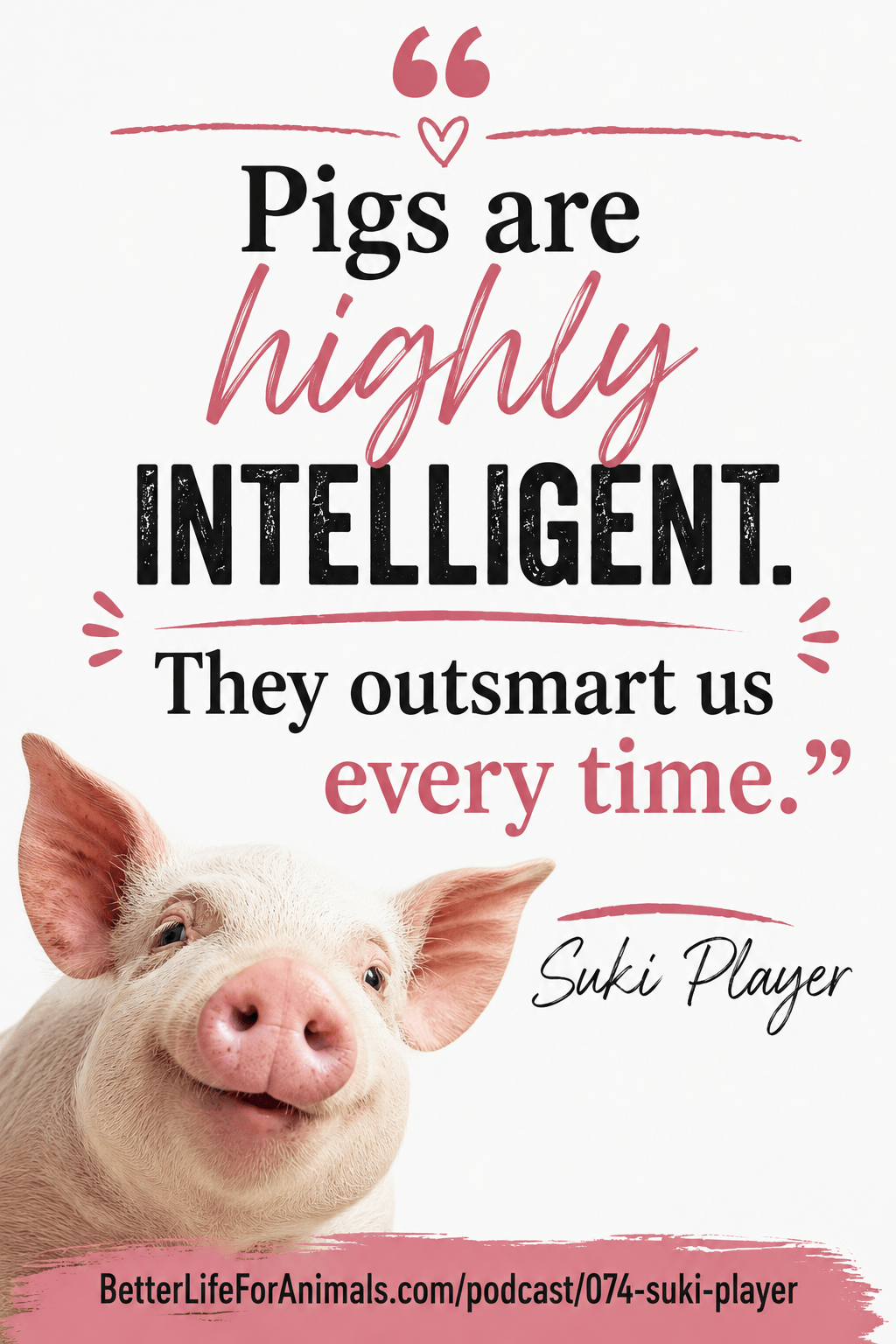 space and specialized care, and have the intelligence and determination of what Suki describes as a giant three-year-old toddler.
Her questions for anyone thinking about bringing home a pig are simple.
Are you willing to sacrifice your garden?
Are you prepared for the pig to grow three times larger than expected?
Are you ready to live with an intelligent, determined animal who may be part of your family for 15 years or more?
These are not small commitments, and Suki believes education before adoption is essential.
What Sanctuary Life Really Looks Like
Today, Little Pigs at Home cares for 16 pigs, along with sheep, tortoises, cats, dogs, and ducks.
The pigs have indoor bedrooms, mattresses, blankets, outdoor access, enrichment activities, and routines built around their individual personalities and preferences. They can choose whether to be inside or outdoors, and their days include opportunities to root, explore, play, rest, and interact with others.
Suki also talks openly about the emotional rehabilitation involved in rescue.
Some pigs arrive grieving for former caregivers. Others come in frightened, in pain, underweight, dangerously overweight, or displaying aggression caused by fear and trauma.
The process of helping them recover can take months. Sometimes it begins with nothing more than sitting quietly beside them, brushing them, talking to them, and giving them the time to decide when they are ready to trust.
The Financial Reality of Saving Lives
Suki is candid about another side of sanctuary life: the financial pressure.
Food costs alone run between £6,000 and £8,000 a year, while specialized veterinary procedures can cost thousands more. The sanctuary relies on donations, tours, fundraising events, volunteers, supporters, and stays at its Rosehaven accommodation to continue caring for the animals.
The sanctuary’s income is seasonal, but the needs of the animals are not.
Food bills continue. Veterinary emergencies happen. Buildings need repairs. Specialized cases require time, equipment, medication, and professional care.
Yet some of the support that keeps Suki going cannot be measured in pounds.
A shared social media post. A donated blanket. A kind word. A prayer. Even a free vegan meal left for her by a supporter at a local café.
As Suki puts it, their batteries run on their supporters.
Changing Hearts One Pig at a Time
Little Pigs at Home welcomes people who are not vegan because education is central to its mission.
Suki has seen what can happen when people meet pigs close up, touch them, watch them interact, and begin to recognize their individual personalities.
Some visitors leave saying they had no idea pigs were so intelligent.
Others leave saying they no longer want to eat them.
That is the heart of Suki’s work. She is not only providing a safe home for pigs who need specialized care. She is giving people the opportunity to see these animals differently.
This episode is an intimate look at what happens when pigs are given the chance to be known as individuals rather than viewed as products. It is also a reminder that changing how people see animals often begins with something very simple: meeting them.
Episode Highlights
[00:00] Introduction
[02:00] The start of Little Pigs at Home Animal Sanctuary
[05:30] It all started in the kitchen with one pig
[08:00] Committed to getting pigs out of the food chain
[11:00] Getting medication for pigs can be tough
[13:30] A day in the life of Suki Player and her clan
[19:00] The life of pigs is very different than what most people think
[24:00] The story of one pig can change hearts and minds
[28:00] From a terrified pig to a happy camper
[32:00] Funding the sanctuary has many challenges
[36:00] Preparing for a pig is much more than most people would imagine
[39:00] Find @littlepigsathome on social media
About Suki Player
Suki Player with her husband Aaron Player are the founders of Little Pigs at Home Animal Sanctuary in Pembrokeshire, Wales, a specialist rescue dedicated primarily to pigs with complex medical, behavioral, and high-risk needs. Established in 2022, the sanctuary provides lifelong care for animals who would otherwise have little chance of survival, with a particular focus on disabled and vulnerable pigs.
While pigs are at the heart of the sanctuary’s mission, Suki has also rescued and cared for sheep, ducks, tortoises, dogs, and cats, offering each animal a safe and compassionate environment. The pigs live in the grounds of her home, where they receive more individualized attention and support.
What sets Little Pigs at Home apart is its commitment to advancing veterinary understanding. The sanctuary regularly hosts veterinarians on placement and works closely with specialists at the University of Bristol’s Langford Vets to improve standards of care for pigs. Through this collaboration, Suki is helping address a critical gap in veterinary medicine, where treatment for farm animals is often limited due to their classification within the food system. Several pigs at the sanctuary have undergone groundbreaking procedures, contributing to broader awareness and progress in pig care.
In addition to the sanctuary, Suki operates Rosehaven, a static caravan on-site that is rented to help fund the sanctuary’s work & Nanny Jill’s cabin which is accessible accommodation. Suki also runs a vegan beauty salon on-site. Through her dedication, she has created not only a refuge for animals but also a center for education, advocacy, and meaningful change in how farm animals are treated.
About Cheryl Moss
Cheryl Moss is the host of the Better Life for Animals podcast, where she shares uplifting stories from sanctuaries and highlights the work of vegan activists, ethical consumers, and animal welfare leaders. She is also the founder of the Funding Blueprint for Sanctuaries summit, designed to empower those involved with sanctuaries to create sustainable funding streams.
A passionate advocate for animal welfare, Cheryl is dedicated to ending factory farming and supporting underrepresented sanctuaries.
Beyond podcasting, Cheryl is a banking professional and an accomplished children’s author. A graduate of Main Street Vegan Academy, she recently added Vystopia Transformation to her resume. The Vystopia work, created by psychologist Clare Mann, focuses on the emotional impact many people experience after becoming aware of animal suffering and exploitation. The training offers tools for resilience, communication, and emotional well-being while continuing to advocate for positive change.
Through her books, Gabriel, Cluck, and Pickle the Pig, Cheryl inspires young readers to embrace kindness, sustainability, and compassion for animals.
When not advocating, she enjoys Pilates and spending time with her rescue dogs and grandchildren. Through her work, writing, and activism, Cheryl continues to inspire positive change for animals and the planet.
https://www.facebook.com/BLFAnimals/
https://x.com/betterlife4anim
https://www.instagram.com/betterlife4animals/
https://www.linkedin.com/in/cherylmossabetterlifeforanimals/
